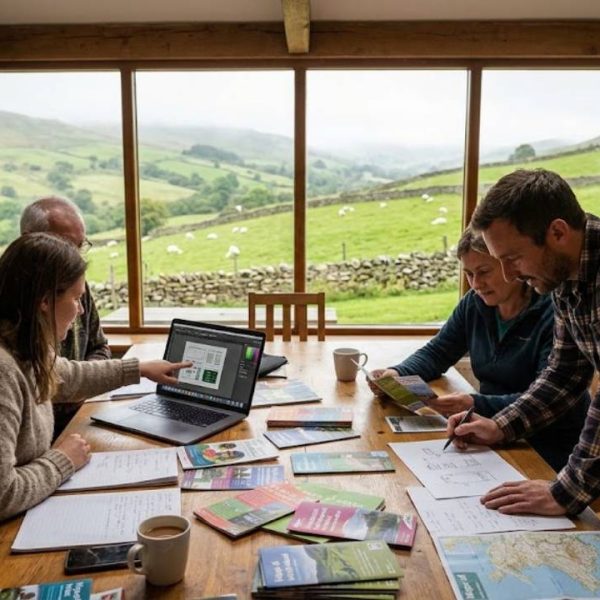
Tourism organisations produce a surprising amount of text. Event listings, walking routes, accommodation guides, visitor information, seasonal campaigns, social media posts and printed brochures all compete for attention, and they must often appear in two or more languages. For regions where a local language sits alongside a major international one, bilingual content is not an extra but a requirement. Managing it by e-mail and shared folders works for a short time and then starts to fail.
The rhythm of tourism content
Tourism content follows the calendar. Spring brings walking and cycling routes, summer brings festivals, autumn brings food events and winter brings holiday markets. Each season creates a burst of new text with a hard deadline, because information that arrives after the event is worthless. Teams are often small, and the same few people write, edit, translate and publish. Without a clear process, translation becomes the bottleneck that holds back every campaign.
Why a system helps
A translation workflow management system gives every piece of content a status and an owner. New text is submitted, assigned to a translator, reviewed and approved, and the result flows back to the website or the print file. Everyone can see what is waiting and what is late. A reviewer in another office can check a text without receiving an attachment, and a manager can see at a glance whether the next campaign is on track.
What the system actually does
If you wonder what is a translation management system and whether a small organisation needs one, the answer is simple. It is a shared workspace that connects files, people, memory and glossaries. A translation workflow management system automates routine steps such as notifications and file routing, and keeps a record of what was done, so nothing depends on one person's inbox.
Reusing what you already have
Tourism text repeats itself more than people think. Opening hours, accessibility notes, transport directions, booking terms and safety advice appear in many places, with small variations. A translation memory remembers every approved sentence and offers it again, so only new details need translating. For organisations that publish hundreds of listings, this saves both time and money and keeps wording uniform across the site.
Place names and local terms
Names matter greatly in tourism. Villages, mountains, castles, trails and dishes have names that should be spelled the same way everywhere, and some should never be translated at all. A glossary records which names stay as they are, which have an established translation and how local terms should be explained. This protects the identity of the destination and avoids embarrassing inconsistencies on signs and maps.
Brochures, maps and PDFs
Many visitor materials still exist as fixed-layout documents. Translating them properly requires extracting the text, working on it in an editor and putting it back into the layout. A practical guide to translating PDFs explains the options and pitfalls, from scanned files to documents with text in images, and helps teams to prepare their source files so that translation is quicker.
Language tags and the website
Multilingual websites need correct technical foundations. Pages must declare their language, alternate versions should be linked, and visitors should be able to switch easily. The W3C explains how to choose and use identifiers in its language tag guidance, which is helpful for the people who manage the site. Clean technical setup helps search engines to show the right page to the right visitor.
Working with local translators and reviewers
Many tourism bodies rely on local translators who know the region. A cloud-based system lets them log in, see their tasks and deliver without installing anything. Local businesses, such as hotels or tour operators, can also be invited to review text about their own services. Comments stay attached to the text, and approved wording goes straight into the memory for next time.
Accessibility and plain language
Visitor information should be easy to understand for everyone, including people who read in a second language. Short sentences, clear headings and consistent terms make translation easier and reduce misunderstandings. Ask translators to flag text that is hard to translate because it is vague or full of idioms, and use their feedback to improve the source. Over time, clearer source text leads to better translations in every language.
Planning for peaks
Set up templates for recurring campaigns so that the steps, deadlines and reviewers are already defined when the season starts. Agree on a calendar with a realistic lead time for translation, and send the source text early. When the source arrives late, the whole chain compresses, and quality suffers. A system that shows upcoming deadlines helps to protect the schedule.
Measuring the result
Track a few simple numbers over a season: how long it takes from final source text to published translation, how many corrections were needed after publication and how much text came from memory. These figures show where time is lost and help you to justify the investment to the people who fund the organisation.
Final thoughts
Visitors judge a destination partly by how well it speaks to them. A translation workflow management system helps small tourism teams to publish accurate, consistent content in every language on time, with less stress at the busiest moments of the year. Start with one campaign, learn from it and let the process grow.